Accra’s flooding: The Water Always Remembers its path.
Accra’s flooding: The Water Always Remembers its path.

The rain in Accra did not start with a bang, but with a steady, rhythmic drumming on the aluminium roofing of Adentan, Madina, Nima, Gamashie, Kaneshie, and other parts of the capital. Within forty-five minutes, the drumming turned into a roar.
In his office, Kwame, not his real name, a senior town planner in one of the Metropolitan, Municipal, and District Assemblies (MMDAs) in the region, sat behind a desk piled high with zoning maps, engineering reports, and unsigned enforcement notices.
Kwame’s walls were lined with master plans that looked beautiful on paper.
On paper, Accra was a smart city. On paper, water flowed safely to the sea. His phone buzzed. It was a WhatsApp video from his cousin in Alajo, one of the flood-prone areas in the capital city.
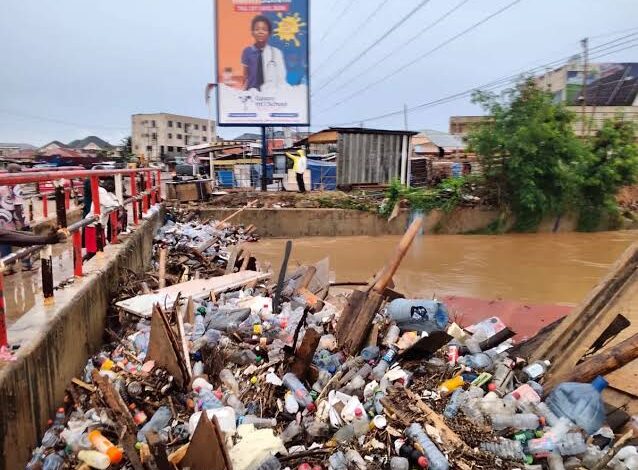
The Odaw River had already breached its banks. The video showed muddy, trash-choked water rising to the headlights of a trapped minibus.
People were wading through waist-deep filth, carrying children and some aged on their shoulders. Kwame closed his eyes. He didn’t need the video.
He knew the geography of the disaster by heart. In March 2026, Kwame had stood in the blazing sun just two miles away, pointing at a massive concrete foundation.
A private developer had blocked a critical secondary drain, diverting the natural path of the water into a tight, ninety-degree choke point.
“You have no permit for this,” Kwame had told the site foreman. His voice shook with a mix of anger and exhaustion.
The metropolitan assembly bylaws are clear. This structure will cause catastrophic flooding the moment the June rains hit.”
The foreman had simply smiled, handed Kwame his phone, and said, talk to your boss.
On the line was a high-ranking director from the assembly. “Kwame, leave the men to work,” the voice had instructed smoothly.
The paperwork is being processed at the top. We will handle the engineering adjustments later. Later never came.”
The institutional machinery of Ghana’s MMDAs has been completely paralyzed by a toxic mix of political interference, compromised inspectors, and a severe lack of logistical resources.
When Kwame requested excavators and bulldozers to demolish illegal structures in the floodplains, the fuel budgets were always empty.
When he issued stop-work orders, they mysteriously vanished from the official registry. The local authorities possessed all the legal powers on paper, but zero enforcement will in reality.
A sudden shout from the corridor broke Kwame’s thoughts. Water was bubbling up through the floorboards of the assembly’s own ground-floor archive room.
He rushed downstairs. Clerks were frantically scrambling to lift decades of land registries, drainage blueprints, and master plans off the floor.
The very documents meant to protect the city were now dissolving into mush in the rising, murky water. Kwame stepped outside into the courtyard.
The rain was blinding. He watched the torrent sweep down the street, carrying plastic waste, car tires, and the ruined belongings of his fellow citizens.
The water was simply reclaiming the path it had been denied by concrete, corruption, and administrative silence.
He pulled out his phone, his fingers slick with rain, and posted the video of the flooded metropolitan assembly archives online.
Underneath the footage of the dissolving city plans, he typed the bitter truth that everyone knew, but few dared to say so plainly.
Indiscipline among citizens, corruption, and weak oversight by local assemblies have enabled encroachment on public spaces and waterways, and the end result is what we are all witnessing across the country.
Ghanaians, both rich and poor. The powerful and the powerless. The influential and noninfluential, let’s be mindful that the Water Always Remembers.