
Ban on Plastics: Local manufacturers demand GHS1. 493 billion bailouts
Ban on Plastics: Local manufacturers demand GHS1. 493 billion bailouts

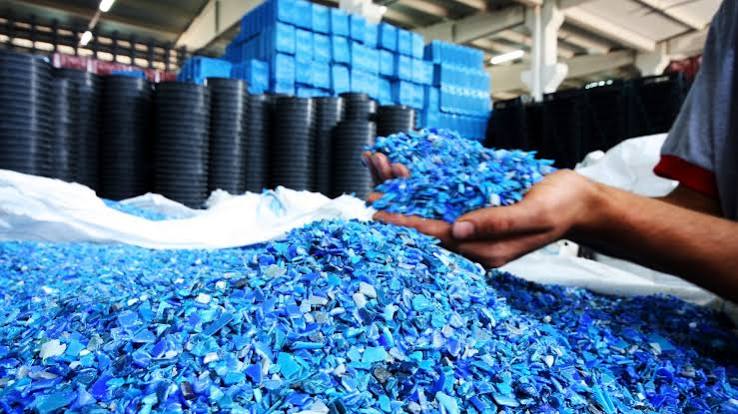
The Ghana Plastic Manufacturers’ Association (GPMA), whose business is largely going to be affected by the government’s controversial plan to ban polystyrene foam products, effective January 1, 2027, is demanding GHS1. 493 billion financial bailouts.
In a release signed by the President of GPMA, Mr. Ebbo Botwe, explained that the transition from General Purpose Polystyrene (GPPS) and Polystyrene (PS) to other alternatives could be possible within 18 months.
“Currently, the GPPS/PS machines cannot be retooled for any alternative. Styrofoam machines cannot be retooled to manufacture other types of plastic packaging, including bioplastics, as they are designed solely for Styrofoam products,” he reiterated.
Below is the full version of the release
Ban On Plastics: Manufacturers Cry
Over Massive Investments, Job Losses, Call
For Extension Of Time, GHS1. 493B
Financial Bailout
The Ghana Plastic Manufacturers’ Association (GPMA), whose business is largely going to be affected by the government’s controversial plan to ban polystyrene foam products, effective January 1, 2027, has finally responded to the impending action, calling for an extension of time and focus on critical matters before enforcement.
The manufacturers say they, in principle, agree with the bold decision but are concerned about the limited time, demanding a fair implementation plan, paying key attention to their investments and job losses.
According to the representatives of the plastic industry, the announcement by the government through the Environmental Protection Authority (EPA), though in order, was too sudden, suggesting a realistic extension of the period to at least 18 months.
Alternatively, they are asking for a financial bailout of some sort, pleading with the government to intervene and reimburse the capital investment cost of their plants and machinery totaling GHS1. 493 billion.
In May 2026, the Prof Nana Ama Brown Klutse-led Authority announced that steps are being taken to ban the production materials forms part of broader national measures aimed at improving environmental sanitation, safeguarding public health, reducing plastic waste, and promoting sustainable development.
According to the Authority, the ban will apply to all forms of expanded polystyrene (EPS) products used for commercial and human activities.
These include food packaging containers and takeaway packs, disposable cups and plates, form food packs used by restaurants and chop bars, as well as packaging and cushioning materials.
The prohibition will also extend to polystyrene-based ceiling and insulation materials, foam mattresses, bedding products, and other EPS items intended for human use or consumption-related activities.
It comes one year after President John Mahama, during the launch of the 2025 National Tree Planting exercise, hinted about plans to address the production and use of plastics.
The announcement, which has ruffled many feathers, directed manufacturers, who are going to be directly affected greatly, to get set to switch to the production and sale of more sustainable alternative food packaging products to stay in business.
But the GPMA has major concerns raised in their statement dated June 12, addressed to the Chief Executive Officer (CEO), saying the issues surrounding the ban are bigger than what is being envisaged and suggested.
The release signed by the President, Ebbo Botwe, the Association, in their release, enumerated one after the other their legitimate concerns, calling for a relook at the decision.
Currently, the industry has over 171 production factories across the country. The industry has created direct job opportunities for over 41, 395 people and also generates over 1, 89 million jobs in the plastic waste recycling sector, and so collapsing it will mean that all these jobs are going to be lost to the ban.
Additionally, they create some 1. 43 million jobs in the sachet, bottled water, and beverage industry, and other auxiliary sectors.
In a country and economy where decent employment is very difficult to come by, GPMA says they in total employ about 3.71 million people. Laying more facts bare, it said about 92 percent of the industries in Ghana depend on them for all their plastic packaging needs.
Coupled with the likely explosive job losses is the observation that the sector contributes significantly to the economy, coming fifth after gold, crude oil, cocoa, and cashew as Ghana’s top ten commodity exports.
Not only is the ban going to affect operations in Ghana, but they also disclosed that the market in the sub-region is going to be greatly affected, as many countries rely on Ghana for these plastics.
Presently, about 57 percent of exports go into ECOWAS nations, including Togo, Sierra Leone, Maki, Niger, Nigeria, Benin, Ivory Coast, Liberia, and Senegal, which are likely to suffer due to the ban, stressing the need to move slowly.
Under the law, Free Zone-registered companies are required to export up to 75 percent of their products. Interestingly, these countries have not enforced this ban as suggested in Ghana.
Making these points clear to the Authority, the statement indicated that the Association will be willing to support the ban “provided this action is taken at a zero cost to our capital machinery cost of GHs 1.493 billion”.
They said the transition they agree is inevitable, but “it must be done in fairness, as far as our cost of investment in existing machinery is reimbursed. These investments were made under the existing regulatory framework, and therefore, a sudden transition will present several challenges”.
GPMA stressed that the most appropriate time to transition from GPPS/PS to other alternatives will be in 18 months. They explained that this will be when all necessary factors will be in place, indicating that rapidly implementing the ban “will not be in the interest of the government, nor in the interest of the investor community.
Quite apart from the aforementioned realities staring them in the face, the manufacturers expressed deep concerns about their investments and loans from the financial sector.
According to them, “Our investments in plants, machinery, and operational requirements are presently tied to bank loans and financial commitments, and any attempt to start the proposed Styrofoam ban from 1st January 2027 will cause a big financial crisis to the plastic industry.
Following the announcement by the EPA, the banks have been in panic mode, wondering whether the manufacturers are going to be able to repay their loan agreements if the ban is enforced and the machines are no longer going to be in use to generate the necessary revenue to settle the debts.
“Since EPA’s press release, the banks have taken serious concern as to what will happen to our machinery and how to recover their loans if the machines become scrap. It is therefore crucial that EPA consider a review of the press release to announce new transition timelines of the proposed Styrofoam ban to ease uncertainty in the industry.”
Furthermore, the manufacturers whose operations are capital-intensive cried out, saying that return on cost of GPPS/PS machinery takes up to 10 years, indicating that most of the companies recently acquired some of these machines, and enforcing the ban will automatically mean that a huge loss on their investment.
Citing a clear case of one company that procured some of these machines two years ago, they said the period to recover its investment cost will be 2030, and anything aside from that will mean a huge loss to the company.
Touching on a possible capital flight issue, the release noted that in the event the ban takes effect, the companies will likely be forced to move their machines and businesses to a friendly country, pointing out that the decision will require movement of foreign exchange, which will, in effect, cause inflation and other related matters.
Arguing forcefully on the issues of the machines, the manufacturers lamented that the current GPPS/PS machines cannot be retooled for any alternative, indicating that Styrofoam machines cannot be retooled to manufacture other types of plastic packaging, including bioplastics, as they are designed solely for Styrofoam products.
“For your guidance, the Raw Material used to manufacture Styrofoam food containers is also used to manufacture other products such as ‘BIC’ pens. Therefore, any attempt to use HS Code to block or stop the material importation will cause a severe financial loss and operational disruptions to any company that uses Polystyrene raw materials for other manufacturing purposes.
For your guidance, Raw Material procurement is based on a ‘4-lot’ system of 1 lot per quarter. This means it takes 12 calendar months (1 year) to complete a circle. Another example of why the 1st January 2027 will cause serious financial losses to the companies involved.”