Ghana, Switzerland to co-chair UN “Water for People” Dialogue session during 2026 United Nations Water Confab in Abu Dhabi – Ahmed Ibrahim
Ghana, Switzerland to co-chair UN “Water for People” Dialogue session during 2026 United Nations Water Confab in Abu Dhabi - Ahmed Ibrahim

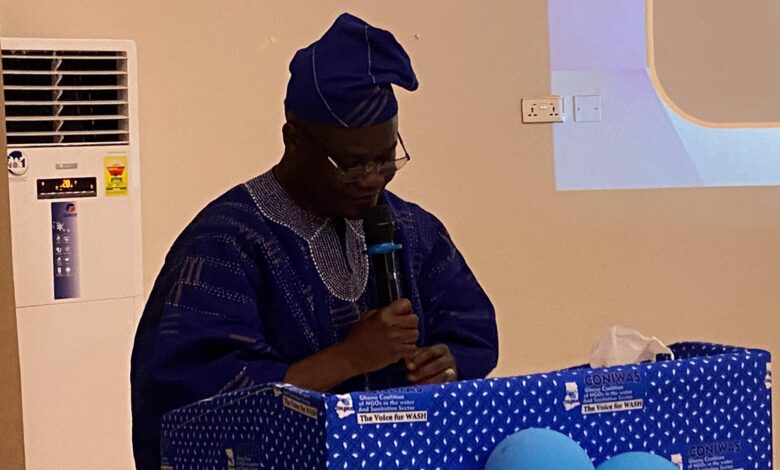
The Minister for Works, Housing, and Water Resources, Mr. Ahmed Ibrahim, says Ghana is honoured, together with Switzerland, to co-chair Interactive Dialogue A, “Water for People,” at the 2026 United Nations Water Conference in Abu Dhabi.
According to him, the dialogue will focus on the human right to water and sanitation, including for those in vulnerable situations, for healthy societies and economies. Adding that, this session is the global expression of the “Leave No One Behind” principle.
The Works, Housing, and Water Resources Minister addressing participants at the opening of the 37th edition of the MOLE Conference Series (MOLE XXXVII), currently underway at the Aqua Safari Resort in Ada, hinted that Ghana’s co-chairship carries both opportunity and responsibility.
Mr. Ibrahim explained that the theme for the 37th edition of the conference, “Accelerating Climate-Resilient WASH Service Delivery for Last-Mile Communities: Options, Strategies and Actions”, is both timely and strategic.
According to the minister, it confronts the WASH sector stakeholders with the dual imperative of closing persistent service gaps for those furthest behind, while ensuring that the systems they build can withstand and adapt to the intensifying impacts of climate change. This, he said, is the defining task for the remaining years to 2030 and beyond.
Mr. Ibrahim reiterated that Ghana has recorded important gains in WASH coverage. Access to basic drinking water services has expanded, and successive governments have invested in urban and rural infrastructure, but he was quick to add that significant disparities still remain. Safely managed water services are still limited, particularly in rural and remote areas.
Sanitation coverage, the minister noted, lags, and open defecation continues in too many communities. These gaps, he said, are concentrated among the poorest households, hard-to-reach settlements, riverine and island communities, and groups that include women, girls, persons with disabilities, and the elderly.
Climate change, according to him, is amplifying these vulnerabilities. Prolonged dry seasons reduce the reliability of surface and groundwater sources.
“Intense rainfall and flooding damage infrastructure, contaminate water points, and overwhelm sanitation systems. Rising temperatures and shifting rainfall patterns affect both water availability and the ability of schemes to operate sustainably.
For last-mile communities, these impacts are not future risks. They are present realities that determine whether a borehole functions, whether a toilet facility remains usable, and whether a household can maintain dignity and health.
The principle of Leaving No One Behind, which anchors the Sustainable Development Goals and Ghana’s own commitments, therefore requires more than incremental expansion of services. It demands deliberate targeting, climate-resilient design and accountability systems that track not only aggregate coverage but also equity, reliability and continuity of service for those who have historically been left behind,” Mr. Ibrahim pointed out.
He explained further that Ghana’s policy architecture provides a solid foundation for the acceleration the conference is calling for.
The Works, Housing, and Water Resources Minister argued that the Presidential Compact on Water, Sanitation and Hygiene, signed in 2024, elevated WASH to the highest level of political commitment. It commits substantial annual resources toward universal access by 2030, with explicit attention to hard-to-reach communities, schools, health facilities, and climate-resilient infrastructure.
The Compact, he explained, is a whole-of-government instrument that must now be translated into coordinated institutional action and measurable results.
“Complementing the Compact are ongoing reforms in service delivery models, regulatory frameworks and inter-sectoral coordination. The professionalisation of rural and small-town water services remains a strategic priority,” Mr. Ibrahim added.
Transitioning from purely community-managed systems to models that combine local ownership with professional operation, maintenance and financial sustainability is essential if schemes are to deliver reliable services year after year. This, he says, requires clear guidelines for private-sector participation, strengthened capacity within the Community Water and Sanitation Agency and predictable financing for operations and maintenance.
On the climate front, the minister called for national adaptation strategies to systematically integrate WASH. Climate-resilient design standards for water and sanitation infrastructure, protection of critical catchments and aquifers, and the mainstreaming of water resource considerations into local development planning are no longer optional.
These, he stressed, are necessary conditions for sustainable service delivery. Equally important is the strengthening of data systems that can identify underserved areas, monitor service reliability under climate stress, and support public accountability.
To achieve these, strategic priorities for acceleration therefore must include, but are not limited to the following:
- Climate-resilient infrastructure standards and siting criteria that account for projected changes in rainfall, temperature and extreme events;
- Professionalised service delivery models for small towns and rural communities, supported by clear regulatory frameworks and capacity-building;
- Targeted financing mechanisms that direct resources to last mile communities, combining public investment, climate finance, private capital and development partner support;
- Equity-focused monitoring and public reporting systems that track who is served, at what level of service and with what reliability; and
- Strengthened multi-level coordination across ministries, agencies, Metropolitan, Municipal and District Assemblies, traditional authorities and communities to ensure that national policy translates into local action.
Mr. Ahmed Ibrahim appealed to participants to ensure that options, strategies and actions developed at this year’s MOLE Conference can inform the commitments that emerge from Abu Dhabi.
“At the same time, the outcomes of the Conference must reinforce the political will, financing and institutional capacity required to accelerate progress at home. Rationalising the Leave No One Behind principle means ensuring that global and national pledges are translated into measurable improvements in reliability, equity and climate resilience for the households and communities that currently lack them.
As we prepare for the Abu Dhabi Conference, Ghana’s contribution should be grounded in practical experience. This includes the implementation of the Presidential Compact, ongoing reforms in rural service professionalisation, efforts to protect water resources from pollution and degradation, and the deliberate targeting of last-mile communities. These experiences can help shape a global agenda that moves from aspirational language to financed and accountable action.
Distinguished participants, MOLE has always been a working platform where evidence is examined, options are refined, and commitments are forged. Over the coming days, let us use this gathering to produce outcomes that are both ambitious and practical:
- Concrete options and strategies for climate-resilient WASH service delivery that are technically sound, financially realistic and adaptable to Ghana’s diverse last-mile contexts;
- Clear actions that government institutions, civil society, the private sector and development partners can incorporate into their work plans and resource allocations;
- Recommendations for strengthening data systems, regulatory frameworks and multi-level coordination so that equity and reliability are systematically tracked and enforced; and
- Shared ownership of the conference outcomes so that the resolutions of MOLE XXXVII are carried forward into implementation and reviewed at subsequent gatherings, he reiterated.
He reaffirmed the ministry’s continued commitment to working with CONIWAS, co-host partners, sector agencies, local governments and all stakeholders to ensure that the outcomes of the conference move from discussion into action.
“The last mile will not be closed by statements alone. It will be closed by sustained political priority, professionalised service models, targeted financing, climate-resilient design and accountability systems that keep the most vulnerable in view.
Ladies and gentlemen, climate change is already testing the resilience of our WASH systems. The communities at the last mile are experiencing that test first and most severely. Our response must match the scale of the challenge. Let us leave this conference with clear options, actionable strategies, and a shared determination to deliver climate-resilient water, sanitation and hygiene services to every Ghanaian community and the rationalisation of leaving no one behind,” the minister emphasised.