Delivering Safe and Equitable WASH Services Is Both a National Responsibility and a Global Imperative — CONIWAS Chairperson
Delivering Safe and Equitable WASH Services Is Both a National Responsibility and a Global Imperative — CONIWAS Chairperson

Access to clean water, dignified toilets, and proper hygiene cannot be dictated by socioeconomic status, geographic location, or vulnerability to a changing climate.
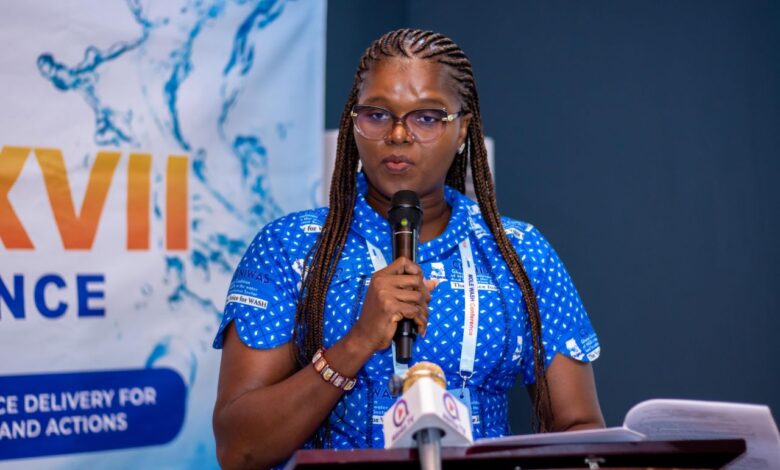
This bold statement anchored the keynote address delivered by Dr. Beata Awinpoka Akanyani, Chairperson of the Ghana Coalition of Non-Governmental Organisations in Water and Sanitation (CONIWAS), at the opening of the 37th edition of the MOLE Conference (MOLE XXXVII).
Speaking at the opening of the 37th MOLE Confab currently underway at the plush Aqua Safari Resort in Ada Foah, Dr. Akanyani said the eradication of water and sanitation deficits is not a secondary development goal, but an immediate national duty and a shared international priority.
Dr. Akanyani presented stark, data-driven evidence highlighting the current inequalities between urban centers and rural territories across Ghana:
- Water Inequity: One in four rural residents completely lacks basic water access, and a mere 17 percent can access safely managed water systems.
- Hygiene Regression: Rural hygiene trends have slipped backwards, dropping from 36 percent in 2015 to 31 percent in 2024.
- Sanitation Deficits: Open defecation remains heavily concentrated in rural locations at 31.3 percent, compared to 8.9 percent in urban centers.
“At the 2015–2024 pace of progress… basic sanitation would reach only about 39 percent by 2030,” Dr. Akanyani warned, underlining the shortfall facing the country’s United Nations Sustainable Development Goal (SDG 6) targets.
Rather than allowing the event to serve as a passive talking shop, CONIWAS leadership issued targeted directives to key institutional stakeholders attending the forum, including state ministers and parliamentary representatives:
The chairperson of CONIWAS appealed to Parliament to champion the rapid activation of the National Sanitation Authority and the Sanitation Fund while strengthening legislative oversight of District Assemblies.
She further urged Local Assemblies (MMDAs) to enforce absolute transparency and issue public reports regarding the utilization of the 20 percent District Assemblies Common Fund (DACF) allocation for WASH.
To Development Partners & Private Sector players, Dr. Akanyani called for direct climate-resilient financing to local districts and pioneer blended financial models engineered for rural populations.
She also challenged traditional authorities to take a firm stance against the environmental destruction caused by illegal mining (galamsey) and unsustainable sand winning that ruins freshwater resources.
Below is an unedited statement delivered by Dr. Beata Awinpoka Akanyani – Chairperson, CONIWAS, at the 37th MOLE XXXVII WASH Conference
Ghana Coalition of NGOs in Water and Sanitation
MOLE XXXVII WASH Conference
Aqua Safari Resort, Ada Foah • 1–6 November 2026
WELCOME ADDRESS
Dr. Beata Awinpoka Akanyani – Chairperson, CONIWAS
Salutation
Nene Agudey Obichere III, Ada State Mankralo, representing the Paramount Chief of the Ada Traditional Area and Chairperson for the Occasion;
Honourable Ahmed Ibrahim, Minister for Works, Housing and Water Resources;
Honourable Mahama Ayariga, Minister for Local Government, Chieftaincy and Religious Affairs;
Honorable Linda Obenewaa Akweley Ocloo Greater Accra Regional Minister
Honourable Members of the Parliamentary Select Committee on Sanitation and Water Resources;
Honourable Kenneth Kabu Kofi Kornor, Municipal Chief Executive of Ada East;
Heads and representatives of Ministries, Departments and Agencies;
Our Child Sanitation Diplomat, Miss Nabeeha Erasoung Sulemana Atiah;
Our distinguished guests from the Netherlands, the United States and Canada;
Development Partners, Donors and Sponsors;
Members of the CONIWAS Executive Committee, Council of Elders and member organisations;
Representatives of academia, the private sector and the media;
Distinguished ladies and gentlemen:
Good morning, and a very warm welcome to Big Ada.
On behalf of the Executive Committee and the more than ninety member organisations of the Coalition of NGOs in Water and Sanitation (CONIWAS), it is my honour and pleasure to welcome you to the 37th MOLE WASH Conference. Since 1989, MOLE has served as a leading national platform for dialogue, accountability and collective action on water, sanitation and hygiene (WASH). We recognize with gratitude the many institutions and individuals whose commitment has sustained this important tradition in Ghana.
We are particularly delighted to welcome representatives of the Sanitation and Water for All (SWA) Secretariat (joining us virtually in the course of the conference), and our colleagues from Aqua for All in the Netherlands, Carbon for WASH in the United States, and Queen’s University in Canada. Your participation enriches our discussions, strengthens international solidarity, and reminds us that delivering safe and equitable WASH services is both a national responsibility and a global imperative.
Our theme: a call to reach the last mile
Nene Chair, this year’s theme, “Accelerating Climate-Resilient WASH Service Delivery for Last-Mile Communities: Options, Strategies and Actions,” builds on the deliberations of MOLE XXXVI and challenges us to move decisively from commitments to implementation.
The last mile is not merely a geographical description. It represents people and places too often excluded from reliable services: deprived rural communities, small towns, peri-urban and informal settlements in urban areas, as well as schools, health facilities, markets and other public spaces.
What stands out for last-mile communities include;
- About 1 in 4 rural residents lack basic water. Only 17% have safely managed water. In August 2026, the Local Government Ministry reported basic water at 96.4% urban against 74.4% rural, a 22-point gap.
- Rural hygiene has gone backwards. Rural basic hygiene fell from 36% in 2015 to 31% in 2024.
- Open defecation is concentrated in rural areas. According to the 2021 Census, the rate is 17.7% nationally, 31.3% rural and 8.9% urban.
- Most households share toilets. In 2021, 74% of households lacked exclusive use of an improved toilet: 32.5% shared one and 23% used public toilets. Only 25.3% had an improved toilet of their own.
- Sanitation is the slowest area. At the 2015–2024 pace of about 1.2 points a year, basic sanitation would reach only about 39% by 2030.
- CWSA coverage: CWSA reports rural and small-town water coverage of 61.87% (2023).
Our measure of success must be whether these communities experience tangible, lasting improvements in their daily lives. These figures should compel us to act with urgency, with fairness and with a clear commitment to climate resilience.
A strategic moment for Ghana
Nene Chair, Hon. Minister, distinguished ladies and gentlemen, the global spotlight on WASH presents Ghana with a strategic opportunity.
The African Union has dedicated its 2026 Theme of the Year to sustainable water availability and safe sanitation, calling on Member States to significantly increase investment in the sector.
His Excellency President John Dramani Mahama serves as First Vice-Chairperson of the African Union this year, ahead of Ghana’s chairmanship of the Union in 2027.
Ghana is also co-chairing the “Water for People” interactive dialogue with Switzerland at the upcoming United Nations Water Conference, further raising our country’s international profile.
These developments call for domestic investment and regulatory reforms that match Ghana’s continental and global leadership role.
Commending Government’s leadership
Nene Chair, Hon. Minister, distinguished ladies and gentlemen, Ghana has made visible progress in the WASH sector, and we commend the Government of Ghana for landmark interventions that demonstrate a deepening political commitment to WASH.
First, the decision to raise the District Assemblies Common Fund allocation for WASH to 20 percent, with 10 percent for potable water and 10 percent for environmental sanitation. This bold step recognises the central role that local government must play in improving WASH outcomes.
Second, we applaud the Government for securing a €323 million financing package, led by the European Investment Bank, for the Northern Ghana Water and Sanitation Project. The project will address long-standing water shortages in Tamale, Yendi and Damongo in the Northern and Savannah Regions, benefiting more than 1.4 million people, and will support faecal sludge treatment in Wa, Bolgatanga and Yendi. We look forward to its timely implementation and to the tangible benefits it will bring to communities.
We also commend the Ministry of Local Government, Chieftaincy and Religious Affairs for sustaining the National Sanitation Day across the country. The exercise continues to mobilise citizens, traders, institutions and assemblies, and is contributing to cleaner surroundings and improved hygiene practices in our communities.
Fourth, we particularly acknowledge Honourable Mahama Ayariga, Minister for Local Government, Chieftaincy and Religious Affairs, for championing the evacuation of the decades-old waste heap at Agbogbloshie in the Greater Accra Region. Under the National Emergency Waste Evacuation Exercise commissioned by His Excellency the President, approximately one million tonnes of waste are being cleared. This demonstrates what decisive political leadership can achieve for urban sanitation.
We appreciate our sector ministries for convening periodic meetings of the Water and Sanitation Technical Working Groups, and the Ministry of Works, Housing and Water Resources for involving civil society in preparations for the United Nations Water Conference. These platforms are vital for sector coordination, and we encourage that they be held regularly and inclusively, as a foundation for the structured engagement I will address shortly.
We again commend the Parliamentary Select Committee on Sanitation and Water Resources for the critical oversight role it continues to play in monitoring the use of the District Assemblies Common Fund for water and sanitation. Its scrutiny helps to ensure that these resources reach the assemblies and translate into real services for communities.
CONIWAS: advocacy and action in 2026
Nene Chair, Hon. Minister, distinguished ladies and gentlemen, throughout 2026, CONIWAS and its members have worked to translate advocacy into practical progress.
We renewed our engagement with the Parliamentary Select Committee on Sanitation and Water Resources of Ghana’s Ninth Parliament, presenting key sector concerns and advocating increased WASH financing, a comprehensive Water Services Act, the establishment of a National Sanitation Authority supported by a Sanitation Fund, and approval of the revised Environmental Sanitation Policy.
- Our advocacy is yielding encouraging outcomes. The Parliamentary Select Committee has indicated support for the proposed National Sanitation Authority and Sanitation Fund and has invited CONIWAS to submit evidence to inform the legislative process. This follows earlier parliamentary engagement, including advocacy that contributed to tax relief on sanitary pads.
We also collaborated with the Ministry of Works, Housing and Water Resources in preparations for the United Nations Water Conference scheduled for December 2026. Our members raised public awareness through World Water Day, Menstrual Hygiene Day, the Day of the African Child and Global Handwashing Day.
In partnership with WaterAid, we validated a WASH budget-tracking study covering 2024–2026, strengthening the evidence base for engagement with Government and Parliament. We coordinated Ghana WASH Week 2026 under the theme “From Commitment to Action: A Unified WASH Agenda,” including a high-level civil society dialogue on sanitation regulation and outreach in communities, schools, markets, and through radio programmes across several regions in Ghana.
- The validated budget analysis now provides targeted messages for decision-makers. Participants in the Ghana WASH Week dialogue agreed to develop a roadmap for renewed sanitation regulation.
With Water Witness International and the Fair Water Action Fund, we initiated research on water security and rights in cocoa- and gold-producing areas of Upper Denkyira East Municipality.
- Our emerging research on water rights is also drawing attention to communities affected by mining and agricultural pollution
We also supported the capacity development of 66 member organisations of CONIWAS in grant and technical proposal writing, through the Sida CLIMB project partnership with WaterAid Ghana.
The constraints we must confront
Nene Chair, Hon. Minister, distinguished ladies and gentlemen, we must be equally candid about the barriers to progress.
- Financing remains the central challenge. Our budget review identified a sharp decline in the sector’s share of the national budget, from 0.81 percent in 2023 to 0.29 percent in 2024. Allocations stood at approximately GH¢741 million in 2024 and GH¢544 million in 2025. For 2026, the review identified approximately GH¢1.874 billion across selected WASH-related allocations, including district-level earmarks, solid-waste infrastructure and central water projects. Measured against the estimated annual requirement of US$1.7 billion, this points to a financing gap of more than US$1.5 billion. We must also remember that allocations, releases, and actual expenditure are not the same.
- Institutional and regulatory reforms remain unfinished. The proposed Sanitation Authority legislation has not progressed beyond Cabinet; the revised Environmental Sanitation Policy awaits approval; and Environmental Health Units at the metropolitan, municipal and district levels remain inadequately resourced.
- As for the 20 percent Common Fund allocation, the true test is whether these resources are spent transparently and translate into functioning services at the community.
- Reliable information is another critical gap. Consolidated public data on rural water-system functionality and WASH conditions in schools are not readily available. Without dependable data, planning, oversight and accountability are weakened.
- Civil society itself faces mounting pressures. Delays in finalising funding agreements have affected implementation, while shrinking financial support threatens the continuity of national NGOs and their essential work in communities in Ghana.
Government and civil society: indispensable partners
Allow me to address an issue of particular importance to our Coalition. During the past year, meaningful and consistent engagement between civil society and sector ministries, departments and agencies has been difficult. At a time when Ghana needs every available resource and perspective, this gap deserves urgent attention.
Of particular concern is the Joint WASH Sector Working Group, the sector’s principal platform for coordination, which has not been convened since January 2025. Its absence has stalled sector coordination and interrupted the regular updates the sector provides to the Chair and Co-Chair Ministers. We respectfully urge Government to reconvene the Joint Sector Working Group without further delay and to restore a regular schedule of meetings.
Civil society is not a peripheral actor in national development. CONIWAS members deliver services in hard-to-reach areas, support district assemblies, mobilise resources, engage citizens and generate evidence that informs public policy. We value the productive relationships we enjoy with our international partners and remain committed to building equally strong and constructive relationships with our own Government. Our appeal is not for occasional invitations, or for consultation only during emergencies. It is for predictable and meaningful participation in the decisions that shape the sector.
We therefore call for a formal, statutory mechanism for structured engagement between Government and civil society in WASH planning, budgeting, implementation, monitoring and review. An agreed engagement calendar, clear responsibilities and transparent follow-up would strengthen trust, accountability and results. This is not a call for privilege; it is a call for effective partnership in the national interest.
A shared agenda for action
As we deliberate this week, I respectfully urge all stakeholders to translate the conference theme into concrete commitments.
- To Government and sector institutions: reconvene the Joint WASH Sector Working Group without further delay, and establish a regular, institutionalized framework for meaningful engagement with civil society, including CONIWAS, in sector planning, budgeting and review.
- To Government and the Ministry of Finance: adopt a credible multi-year pathway for increasing domestic WASH investment and ensure timely release of approved funds.
- To the Parliamentary Select Committee on Sanitation and Water Resources: champion the establishment of the National Sanitation Authority as the sector’s regulatory body, together with the National Sanitation Fund, and strengthen oversight of the 20 percent District Assemblies Common Fund allocation for WASH at MMDA level.
- To the Ministry of Local Government, Chieftaincy and Religious Affairs and all MMDAs: ensure transparent use and public reporting of the Common Fund allocations for water and sanitation, and strengthen Environmental Health Units, including their elevation to full departments.
- To development partners: support stronger domestic financing systems, enable climate finance to reach districts and underserved communities, and deepen partnerships with CONIWAS member organisations, especially for local-level implementation.
- To private sector actors and financial institutions: develop blended, results-based and enterprise financing models that serve rural and low-income populations.
- To traditional authorities: strengthen local stewardship of water resources and oppose illegal mining, destructive sand winning and other practices that threaten our environment.
- To civil society (CONIWAS) and the media: sustain evidence-based advocacy through our regular budget tracking at the national and MMDAs level, public education and independent scrutiny of WASH commitments.
Making this conference count
The programme ahead offers an opportunity to examine WASH as a political priority, sustainable financing, inclusive service delivery, and climate-resilient WASH in institutions and public spaces. I encourage each participant to approach these discussions not only with a willingness to identify problems, but also to agree on practical actions, responsible institutions, and measurable next steps.
Appreciation and closing
I express my sincere appreciation to the newly elected and re-elected members of the CONIWAS Executive Committee, the MOLE XXXVII Planning Committee, comprising Executive Committee members and co-opted institutions, and the Secretariat led by our Executive Secretary Basilia Nanbigne, Thank you all for your dedication and hard work in bringing us together today. I thank the Government of Ghana, particularly the Ministry of Works, Housing and Water Resources and the Ministry of Local Government, Chieftaincy and Religious Affairs, for their partnership over the years. We look forward to deepening that relationship through sustained and structured collaboration.
I am equally grateful to our donors and sponsors, UNICEF, EU-SWA, WaterAid Ghana, RIVA Ghana, WSUP, CRS, World Vision Ghana, SAHA Global, SNV and ESPA, for their financial support to this conference. To our partners in the private sector, academia and the development community, we say thank you. To the management of Aqua Safari Resort, and to the chiefs and people of Ada, thank you for your gracious hospitality.
Before I conclude, distinguished ladies and gentlemen, permit me to recognise and celebrate one of our esteemed member organisations, the Afram Plains Development Organisation (APDO), as it marks 40 years of dedicated service and impact. On behalf of CONIWAS, I extend our heartfelt congratulations to APDO on this remarkable milestone.
I wish to acknowledge in particular Mr. A.Y.O. Modoc for his visionary leadership, his dedication, and his enduring belief in the power of small but purposeful actions to bring about meaningful and sustainable change. Ayekoo to APDO, its leadership, staff and all who have contributed to this inspiring 40-year journey.
Distinguished ladies and gentlemen, let this 37th MOLE Conference be remembered not only for the quality of our conversations, but for the strength of the commitments that follow. Let us work towards a Ghana where access to safe water, dignified sanitation and good hygiene is not determined by where one lives, what one earns or how vulnerable one is to a changing climate.
I wish you productive deliberations, meaningful partnerships and a memorable conference. Once again, you are warmly welcome to MOLE XXXVII.
Thank you.