
Ibrahim Musah writes: Resetting the WASH Sector in the 2027 Budget
Ibrahim Musah writes: Resetting the WASH Sector in the 2027 Budget

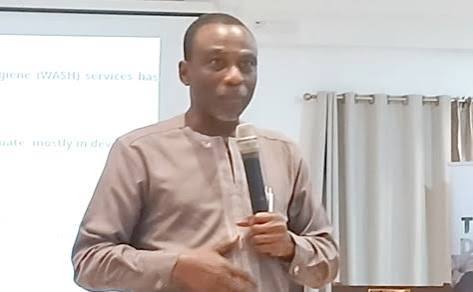
“Treating WASH as productive economic infrastructure yields massive returns. Global and local evidence demonstrates that every GHS 1 invested in sanitation generates up to GHS 4.30 in multi-sectoral returns, while economic models project annual health and productivity savings of up to GHS 67 billion by 2032.”
Introduction.
In a few weeks, in November 2026, Dr. Cassiel Ato Forson, Ghana’s Finance Minister, will present the 2027 budget and economic statement to Parliament for review, debate, and approval.
The first post-International Monetary Fund (IMF) extended credit facility budget aims to consolidate fiscal gains with Policy Coordination Instrument (PCI) support from the IMF.
Signs of macroeconomic stability (reduced inflation over one year, a stable cedi) are clear, and they provide the basis for the Government to translate development ambitions into policy and action. The IMF has upgraded Ghana’s 2026 growth forecast from 4.6% to 5.7%
The 2027 budget aims to “turn economic stabilization into sustained transformation.” Hopefully, the unveiling of the $10 billion New Economy Programme will address critical job issues that the WASH sector can help realize.
This new-economy vision must include the WASH sector, because Ghana’s tourism potential cannot be realized without safe water supplies at tourist sites and a clean environment.

As President Mahama’s resetting continues to positively impact the economy, the Water, Sanitation and Hygiene (WASH) sector’s potential to provide safe WASH for industrial growth and job creation, improve public health outcomes, sustain educational outcomes, and promote climate resilience cannot be underestimated and should be tapped fully.
The new District Assembly Common Fund (DACF) formula, which started in 2025 with a clear 10% allocation to water and 10% allocation to sanitation, should be monitored to ensure disbursements are happening to water and sanitation in all 261 MMDAs.
A strong accountability regime is needed to sustain this innovative WASH financing by His Excellency President Mahama. However, the transformative potential of the WASH sector for economic growth, poverty reduction, and social and human capital development means more funding is needed.
WASH and Economic Growth
The Ghana WASH Sector deserves priority and increased budgetary allocation in the 2027 budget because investing US$1 in WASH yields a US$5-6 return. These returns go beyond economics and include improved educational outcomes, girls’ and women’s empowerment, reduced diarrhoeal cases in deprived rural communities and less resilient cities, and reduced outpatient department (OPD) bills.
Treating WASH as productive economic infrastructure yields massive returns. Global and local evidence demonstrates that every GHS 1 invested in sanitation generates up to GHS 4.30 in multi-sectoral returns, while economic models project annual health and productivity savings of up to GHS 67 billion by 2032.
Strategic capital injections into decentralized preventive infrastructure, market-based sanitation enterprises, and women-led micro-enterprises will shift passive aid dependency toward vibrant economic growth, creating opportunities for job creation and poverty reduction.

The Link Between Water Access, Food Security and Community Resilience
Access to safe water is life; it is fundamental to development and transformation. Without safe water, economic activities cannot thrive; businesses cannot grow, and tax revenue will suffer. Without effective and sustainable management of freshwater sources and rivers, irrigation will not support food production and food security, and nutrition will be compromised.
Irrigation is important for Ghana’s agricultural transformation, food security, and community resilience, also because of the threats of Climate Change (drought occurrences). Inadequate water supply means community resilience will be threatened, especially for poor/marginalized communities in coastal areas and the harsh savanna belt.
The livelihoods of people in these areas depend almost entirely on food crops and fish farming. The 2027 budget must give hope to these people with increased allocation and releases to the WASH sector. The Community Water and Sanitation Agency (CWSA) needs increased funding to sustain ongoing rural and small-town reforms that provide safe water and attract private-sector financing.
Sanitation and Public Health
Sustainable and equitable funding for sanitation can boost public health, reduce expenditure on out-patient department (OPD) cases, stem the tide of cholera and diarrhoeal diseases, improve environmental beauty, and attract tourists into Ghana. Ghana has an unacceptable 17.7% open defecation rate (GSS, 2021). The Institute of Statistical, Social, and Economic Research (ISSER) estimates that Ghana loses GHS 650 million through 31.9 million lost work and school days because of low investment in sanitation.
This amount could, for instance, fund about 2,000 to 3,000 small community-level gari processing hubs within a year, distributed down to the district level, to boost the rural economy by expanding farms, creating jobs in gari processing and trading, and increasing food production.

The Case for CWSA, GWL and WRC
Sustainable and equitable safe water supply rests on the shoulders of the Community Water and Sanitation Agency (CWSA), which is the government agency providing and facilitating safe water supply to rural and small towns in Ghana.
In the 2025 budget, it requested a GHS30,000,000 cash investment (in addition to goods and services, emoluments) but hardly got releases of more than 30% from the Ministry of Finance, even though releases for goods and services were more than 90% and emoluments, as usual, were more than 95%. With a huge shortfall in the investment budget, CWSA will struggle to deliver water for all by 2030 in line with the Government Vision.
The Ghana Water Limited (GWL) is struggling to keep a sustainable and equitable water supply to the urban population in Ghana. Its aged pipelines, obsolete equipment, and lack of modern gadgets to detect ‘‘water thievery ” (in some communities) leave much to be desired. From Tamale to Cape Coast, from Teshie to Takoradi, from Damongo to Yendi, citizens are crying with thirst. They need a sustainable, safe water supply daily to survive and run their businesses.
Importantly, the water resources must be protected and made safe for supply to happen. That is the role of the Water Resources Commission (WRC). They must get modern equipment to monitor turbidity levels to ensure the raw water is safe for treatment and supply to people by the GWL and CWSA. In partnership with the traditional authority and the National House of Chiefs, we hope the government will do more to win the galamsey fight and restore our rivers, water bodies, and forests.
Conclusion.
Indeed, if stabilization is not a destination but a price of entry, it is time to reallocate the benefits of the past two years’ economic stabilization to the WASH Sector, with increased financial allocation to the tune of US$1.7billion in the 2027 budget. The WASH sector holds the key to Ghana’s economic transformation in the next phase from 2027 and beyond.
Writer: Ibrahim Musah, Head of Strategy, Policy and Campaigns, WaterAid Ghana.