
Bleeding Ghana Dry No More: DVLA Exposes and Slashes the Era of Opaque Dollar Deals
Bleeding Ghana Dry No More: DVLA Exposes and Slashes the Era of Opaque Dollar Deals

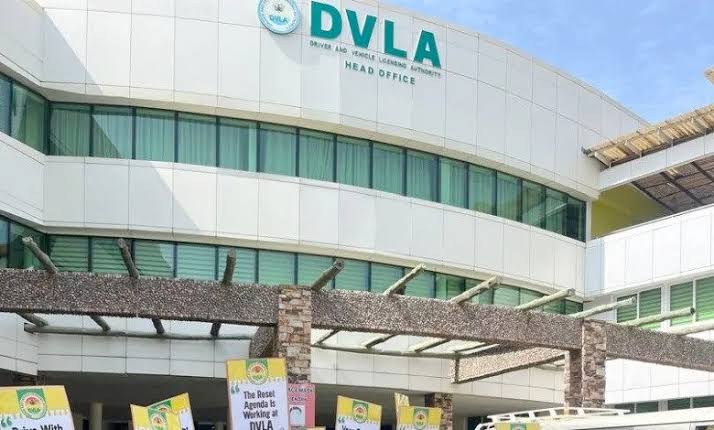
For years, state agencies in Ghana have battled a silent, wealth-draining predator: heavily bloated, dollar-denominated Service Level Agreements (SLAs) with external technology vendors.
The phenomenon of “bloated, dollar-denominated contracts” in Ghana’s public sector has long been a significant driver of fiscal leakage. Lopsided SLAs and revenue-assurance deals often bind state agencies to multi-million-dollar commitments, exposing public funds to severe currency fluctuations and inflating baseline costs.
These long-term contracts frequently lock the nation into draining millions of scarce foreign currencies for services that can often be handled at a fraction of the price.
What readily comes to mind is the infamous Strategic Mobilisation Limited (SML) Revenue Assurance Deal, which was estimated to drain the nation of $100 million annually over a five-year period.
The Energy Sector “Take-or-Pay” Power Purchase Agreements (PPAs): Under the legacy “take-or-pay” clauses, Ghana is said to have paid hundreds of millions of dollars annually for unconsumed electricity and unused gas supply. This forced the state to launch the Energy Sector Recovery Programme (ESRP) to renegotiate agreements, such as the Cenpower Gas Supply Agreement, which saved the state up to $3 billion by shifting primary fuels and restructuring terms.
Not forgetting the Legacy ICT Infrastructure & Strategic Procurement Deals, under which complex public projects, such as consulting for the Pwalugu Dam framework, state digitisation assets, and historic software procurements, were routinely benchmarked in US dollars. State-level validation audits regularly exposed that millions were being committed for tech platforms or services that were either non-existent or heavily inflated by foreign contractors unwilling to accept macroeconomic exchange risks from the Ghana Cedi.
However, a dramatic shift unfolded at the country’s seat of government, Jubilee House on October 12, 2026. Speaking at the Government Accountability Series, the Chief Executive Officer of the Driver and Vehicle Licensing Authority (DVLA), Mr. Julius Neequaye Kotey, announced a jaw-dropping contract overhaul that will go down as one of the most aggressive fiscal downsizes in the history of Ghana’s public sector.
By aggressively renegotiating a single contract for roadworthiness certificates, the DVLA has successfully plugged a massive revenue leak, saving the state an astronomical $50 million annually.

Mr. Julius Neequaye Kotey, Chief Executive Officer of the Driver and Vehicle Licensing Authority (DVLA),
The Ultimate Downsize: Dollar Millions to Cedi Thousands
The scale of the bleeding uncovered during a forensic audit of the DVLA’s books was staggering. Under the previous administration’s arrangement spanning 2023 to 2025, Ghana was legally bound to pay an external vendor a colossal $51.8 million every single year just to manage the roadworthiness certificate system. Over its three-year lifespan, this single SLA projected a total drain of $155.4 million.
“Nobody seemed to know the company’s real work,” Kotey noted bluntly, exposing a classic vulnerability in state procurement where massive values are assigned to obscure technical operations.
Instead of renewing the drain, the DVLA corporate machinery went to war at the negotiation table. The result? The upcoming 2026–2028 operational agreement was completely deflated from a multi-million-dollar burden to a flat, one-time sum of just GH¢2 million for the entire three-year period.
The Tale of Two Deals
| Financial Metric | The Old SLA (2023–2025) | The New Renegotiated SLA (2026–2028) | Net Benefit to Ghana |
| Annual Contract Cost | $51.8 Million | ~GH¢666,666 | $50 Million saved yearly |
| Total 3-Year Commitment | $155.4 Million | GH¢2 Million | Over 98% in fiscal savings |
| Currency Baseline | US Dollars (USD) | Ghana Cedis (GH¢) | Eradicates forex exposure |
A Broader War on Revenue Leakages
This massive victory on roadworthiness certificates is not an isolated incident; it is part of a sweeping, digitised clean-up campaign across all DVLA operations.
For decades, temporary vehicle registration plates (Dealer Plates, commonly known as DP plates) were a primary hotbed for institutional leakages, driven by easily duplicated aluminium plates.
To counter this, management under Julius Neequaye Kotey completely axed the old aluminium plates at Ghana’s ports of entry, replacing them with tamper-proof digital stickers linked to a mandatory system where no vehicle can leave the port without tracking.
The financial dividends of this singular shift have been instantaneous:
- 2024 Revenue: Old physical DP plates yielded GH¢15.41 million.
- 2025 Revenue: The pilot phase of digital stickers raised intake to GH¢22.44 million.
- January–September 2026: In just nine months, the digital stickers generated a record-shattering GH¢27.14 million, comfortably outperforming the entire 12-month totals of previous years.
Dealer Plate (DP) Revenue Expansion (2024 – 2026)
2024: █████████████ GH¢15.4M
2025: ███████████████████ GH¢22.4M
2026: ███████████████████████ GH¢27.1M (Jan-Sept Only!)

Mr. George Spencer Quaye, Chairman of the Governing Board of the Driver and Vehicle Licensing Authority (DVLA).
Funding the Future Digitally
The fiscal discipline displayed by the authority is already translating into historic public contributions. In the 2025 fiscal year, the DVLA injected GH¢17.7 million into the Consolidated Fund and a record-breaking GH¢80.4 million into the Road Fund, marking the highest singular institutional contribution to mandatory road funds in the authority’s history.
Furthermore, the authority has rapidly expanded its accessibility footprint, increasing its physical and public-private hybrid “Ultra Centres” from 33 to 63 locations nationwide within a two-year sprint.
By collapsing an opaque $155.4 million contract down to a manageable local currency fee, the DVLA has provided a stellar blueprint for other state-owned enterprises in Africa.
It proves that with forensic scrutiny, rigorous execution, and a refusal to bow down to lopsided foreign vendor terms, billions of dollars can be retained to build domestic infrastructure.
The massive capital saved from this renegotiation is now slated to bankroll the next generation of transport safety: an upcoming rollout of biometric vehicle tracking systems and Ghana’s highly anticipated digital number plate ecosystem.