
The Fight Against Galamsey: Who is Deceiving Whom, the Government or the Citizenry?
The Fight Against Galamsey: Who is Deceiving Whom, the Government or the Citizenry?

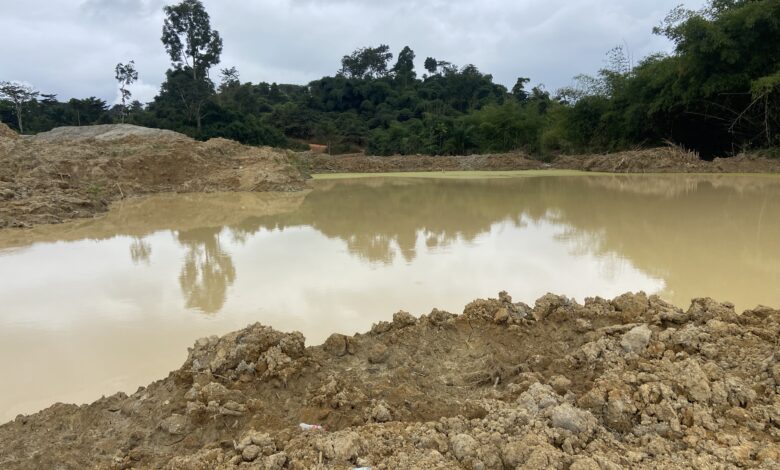
Rivers like the Offin, Pra, Ankobra, Birim, and Densu flow like a thick, milky-brown porridge. Along their banks, the skeletal remains of what used to be a lush forest reserve look like a war zone.
For over a decade, Ghana has been locked in a psychological and environmental war against illegal small-scale mining popularly known in the Ghanaian parlance as Galamsey.
Every political season, the rhetoric intensifies. Task forces are deployed, excavators are burned, and fiery speeches are delivered from Parliament. Yet, the muddy waters remain, and the forest canopy continues to vanish.
As the country faces a looming water crisis and soaring rates of diseases such as kidney failure, linked to heavy metal poisoning, an uncomfortable question echoes across the nation: In this endless fight against galamsey, who is truly deceiving whom? Is it the government playing politics with our future, or is it a hypocritical citizenry trading its heritage for quick cash?
“In this endless fight against galamsey, who is truly deceiving whom? Is it the government playing politics with our future, or is it a hypocritical citizenry trading our heritage for quick cash?”
The Government’s Theatre of Illusion
To understand the deception, one must first look at the state’s multi-million-cedi war on galamsey. On paper, the government’s stance is absolute. The state deploys the military under names like Operation Halt, enforces strict community mining schemes, and pushes legal reforms designed to lock up offenders. But on the ground, the reality looks like a carefully choreographed piece of theatre.
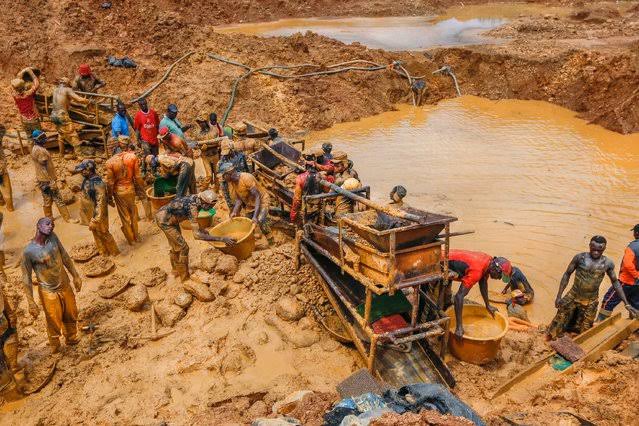
Civil society groups and investigative journalists have repeatedly pulled back the curtain, revealing that galamsey is no longer a poor man’s hustle. It is a highly mechanized, capital-intensive industry.
The multi-billion-cedi excavators and heavy-duty changfang machines destroying riverbeds do not belong to impoverished village youth. They belong to elite financiers.
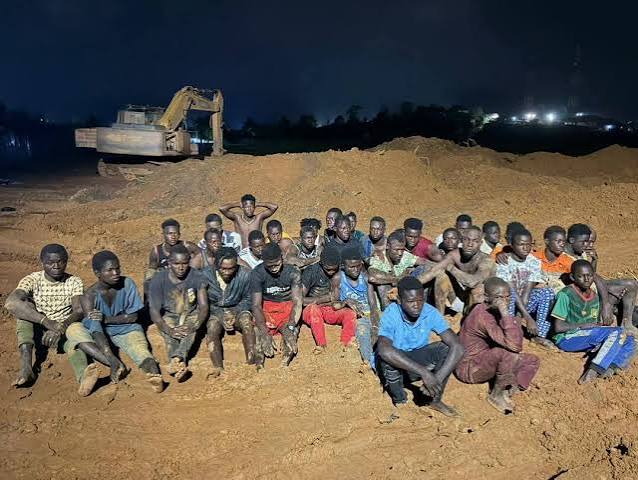
The deception lies in selective law enforcement. While poor, undocumented youths are routinely arrested and paraded before the cameras, the powerful financiers like the politicians, traditional rulers, top law enforcers (security and judicial officials), party executives, and influential elites who bankroll these operations remain virtually untouchable.
Furthermore, the state itself operates under a deep paradox. While regulatory bodies publicly condemn the destruction, reports surface of state institutions subtly regularizing illegal gold flows or local assemblies collecting taxes from illegal sites to boost internal revenue.
It is an open secret: the state loves the economic cushion of gold revenue, even when that gold is stained with the mud of poisoned rivers.
The Citizenry’s Web of Hypocrisy
It would be convenient, however, to blame the entire crisis on political leadership. To do so would ignore a darker, more pervasive truth: the deep complicity of the citizenry.
Step into any mining community, and the collective anger against the government evaporates into a complex web of local collaboration. The very citizens who complain about poisoned drinking water and dying cocoa trees are often the ones leading illegal miners to the land.
The Landowners and Farmers
Tempted by immediate payouts that dwarf years of cocoa harvesting, local families willingly lease ancestral lands and fertile farms to galamsey operators.
The Traditional Authorities
While some chiefs fight valiantly, others act as silent partners. They accept ritual drinks, cash, and shares in mining concessions, rendering local environmental taboos completely useless.
I was astonished to hear one local chief during my recent tour to some cocoa-growing and mining areas say he is patiently waiting for a big mining company to come buy his land in order to buy himself a V8 Land Cruiser, drive around towns and cities to attract young ladies.
If this is the mindset of a custodian of our lands and heritage, is there a future for Mother Ghana and her generation unborn? Your answer is as good as mine.
The Community Informants
When military task forces move in to seize equipment, it is often the local youth who act as lookouts. They tip off the miners via phone networks in exchange for a fee, allowing the illegal operators to move their machinery hours before the state arrives.
The citizen’s defense is almost always rooted in economic survival: “There are no jobs.” It is a valid grievance in a tough economy. Yet, using poverty as an alibi to poison the water tables that feed one’s own children crosses the line from economic desperation into self-deception.
A Mutual Deception Contract
When you strip away the political speeches and the community protests, the fight against galamsey reveals itself as an unspoken, symbiotic contract of mutual deception.
The government pretends to fight galamsey because it needs to satisfy environmental advocates, international partners, and urban voters who want clean water.
The citizenry pretends to be victims of a failed state while actively participating in, protecting, and profiting from the illegal gold rush.
Both sides are playing a dangerous game of survival: politicians are protecting their ballot boxes and campaign funding, while local communities are chasing instant wealth. In this game, everyone is lying to everyone, and everyone is lying to themselves.
The Ultimate Loser
The tragedy of mutual deception is that nature cannot be bribed, and it cannot be voted out of office.
While the government and the citizenry point fingers at each other, Ghana’s water treatment plants are shutting down because the water is too muddy to treat. Heavy metals like mercury and cyanide are entering the food chain, leaving a legacy of birth defects and toxic soil for future generations.
The fight against galamsey will remain a charade until both sides break the contract of deception. The government must muster the political courage to arrest its own financiers, and communities must realize that a fistful of gold cannot buy a clean glass of water.
Until then, the mirror remains clear: we are all deceiving ourselves, and the land is paying the ultimate price.