
Let the declaration of 2026 as Africa’s Year of Water and Sanitation serve as a turning point in addressing deep and persistent gaps in access to WASH – WaterAid admonishes AU leaders
Let the declaration of 2026 as Africa’s Year of Water and Sanitation serve as a turning point in addressing deep and persistent gaps in access to WASH - WaterAid admonishes AU leaders

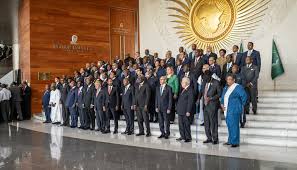
As African leaders prepare for the 39th African Union (AU) Heads of State and Government Summit in Addis Ababa from February 14–15, 2026, WaterAid is urging governments across the continent to translate longstanding water and sanitation commitments into concrete financing and time-bound action.
In a Call to Action issued ahead of the summit, WaterAid says the declaration of 2026 as Africa’s Year of Water and Sanitation must serve as a turning point in addressing deep and persistent gaps in access to water, sanitation, and hygiene (WASH) services.
According to data cited by the organisation, 418 million people in sub-Saharan Africa lack access to basic drinking water, 779 million are without basic sanitation, and 839 million do not have basic hygiene services.
WaterAid notes that these gaps are particularly severe in healthcare facilities and schools, where inadequate WASH services undermine patient safety, infection prevention, learning outcomes, and long-term human capital development.

Although AU Member States have adopted frameworks such as the Africa Water Vision 2063 and policies aligned with Agenda 2063, and endorsed the Heads of State Initiative (HOSI), WaterAid says progress remains slow and uneven.
The organisation warns of a significant financing deficit. Africa requires at least US$78 billion annually by 2030 to achieve Sustainable Development Goal (SDG) 6 on clean water and sanitation, yet current spending is estimated at only US$4.6 billion per year.
WaterAid describes WASH as chronically underfunded, pointing to insufficient and unpredictable national budget allocations, short-term donor financing, and limited private sector participation. Growing debt service obligations in many countries are further constraining fiscal space.
Without a substantial scale-up in financing, WaterAid cautions that Africa risks entering the next decade with structural WASH deficits that could undermine health security, climate resilience, and economic growth.
WaterAid also links inadequate WASH services to preventable deaths and weak health systems across the continent. It estimates that more than one million women and newborns die each year from infections associated with poor water, sanitation, and hygiene conditions, while healthcare-associated infections account for approximately 22 percent of in-hospital deaths in Africa.
The organisation argues that WASH in healthcare facilities must be treated as a core health system investment, noting that every US$1 invested in improving hand hygiene in healthcare settings can generate significant economic returns.
On climate resilience, WaterAid highlights how intensifying droughts, floods, and disease outbreaks are compounding WASH challenges, particularly in vulnerable communities.
Repeated damage to water and sanitation infrastructure and outbreaks such as cholera are increasing healthcare costs and reducing productivity, diverting limited public funds from prevention to emergency response.
The organisation estimates that every US$1 invested in climate-resilient WASH can generate at least US$7 in economic benefits, with potential returns in sub-Saharan Africa equivalent to more than five percent of GDP annually.
In its recommendations, WaterAid is calling on the AU Commission to formally endorse and elevate the Africa Water Vision 2063 and Policy, positioning WASH as a head-of-state priority linked to health security, climate resilience, and economic transformation. It is also urging African Heads of State to progressively allocate at least five percent of national budgets to water, sanitation, and hygiene, and to ensure sanitation and hygiene budget lines reach at least 0.5 percent of GDP in line with previous AU declarations.
The organisation further calls for the development of costed, cabinet-endorsed national roadmaps for WASH in healthcare facilities with ring-fenced funding, the institutionalisation of accountability through National WASH Accounts with clear budget lines and transparent reporting, stronger integration of WASH commitments within Nationally Determined Contributions and National Adaptation Plans, and high-level participation in the United Nations Water Conference scheduled for December 2026.
WaterAid maintains that Africa already has the policy frameworks and technical solutions needed to achieve universal access to WASH. What is now required, it argues, is sustained financing and decisive political will to convert commitments into action.
The organisation concludes that the AU Year of Water 2026 presents a critical opportunity for presidential leadership and domestic resource mobilisation to protect public health, strengthen climate resilience, accelerate economic growth, and advance the goals of Agenda 2063 and SDG 6.