
Betrayed By the Guardians: My Weeks Inside Ghana’s Galamsey and Cocoa Heartlands
Betrayed By the Guardians: My Weeks Inside Ghana’s Galamsey and Cocoa Heartlands

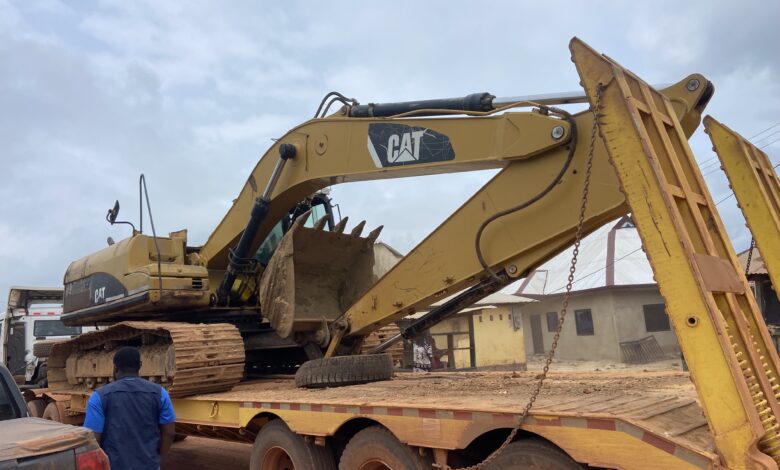
A week and a few days spent in the mining and cocoa-growing areas of the Upper Denkyira East and West Municipalities exposed a brazen, unapologetic economy of ecological destruction.
Excavators move freely in broad daylight, pass through police checkpoints, and, in some cases, even in front of police stations, yet no one is arrested.
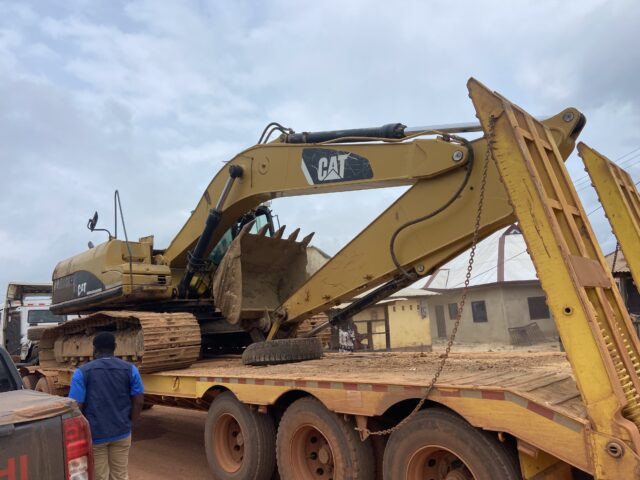
The morning sun over Dunkwa-on-Offin did not bring its usual golden warmth; instead, it cut through a thick, choking haze of dust and chemical fumes. I stood by the roadside, a notebook hidden beneath my arm, watching a massive flatbed truck haul both brand-new and used excavators straight down the municipal highway.
The heavy machines passed within arm’s reach of a police barrier. The drivers did not switch off their engines. No officer at post reached for a ticket book or demanded to see a permit.
A few words were usually exchanged, a hand extended in a brief, practiced gesture, and the trucks rolled onward toward their intended destination.
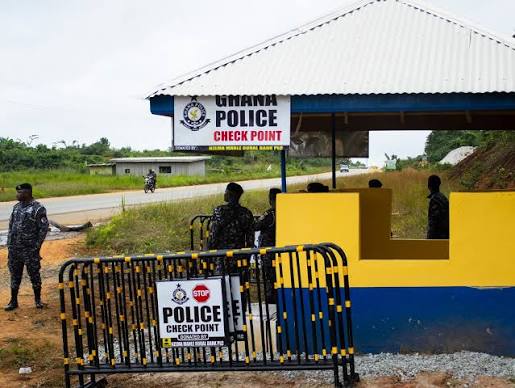
“Go down to the commercial highway,” a Taxi driver who was driving me around town retorted and laughed bitterly.
“They don’t even hide it anymore, senior,” whispered Kwesi, a local cocoa farmer I was with whose family land had been forcibly bought out by a local syndicate three months prior. “If you have the money, the road is always clear.”
Determined to see it for myself, I spent the next few days walking through one of the bustling commercial districts of the Central Region. What I found was not an underground criminal network, but a highly organized, fully institutionalized economy operating in plain sight.
Just a few kilometers from the municipal assembly, there is a compound run by foreign operators (a Chinese company, Dunkwa-China Mall). They don’t sell excavators, but they have a showroom for modified water pumps, steel changfang frames, and heavy-duty washing plants. It is a one-stop shop for environmental destruction, operating with a valid business license.
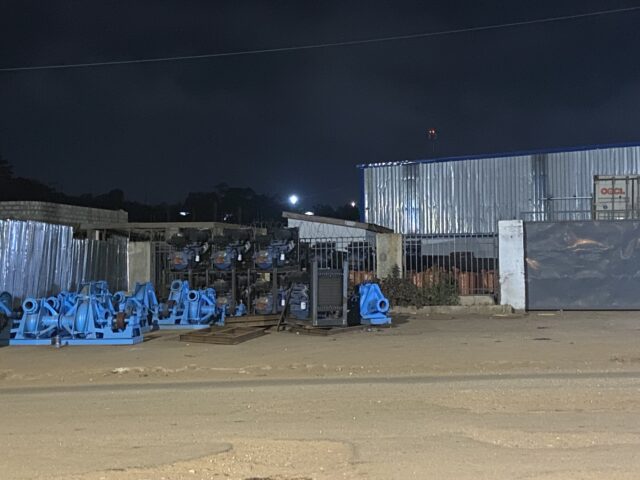
In the hardware sector, rows of local merchants openly displayed illegal mining gear. Hundreds of changfang washing boards lined the sidewalks. Pumping hoses were coiled like giant pythons outside stores, and sacks of suspected unregulated chemical processing materials sat stacked on the pavements. There were no masks, no secret handshakes, and absolutely no fear of the law.
The blatant openness of the trade made the state’s high-profile anti-galamsey campaigns feel like a cruel joke.
Just weeks earlier, I had watched evening news broadcasts showing government officials (both politicians and technocrats) in Accra giving fiery speeches about a renewed National Anti-Illegal Mining Operations Secretariat (NAIMOS) task force.
The television had flashed images of security forces conducting dramatic dawn raids in some mining communities in the western, eastern, and central regions, claiming that hundreds of suspects had been arrested and dozens of excavators seized.
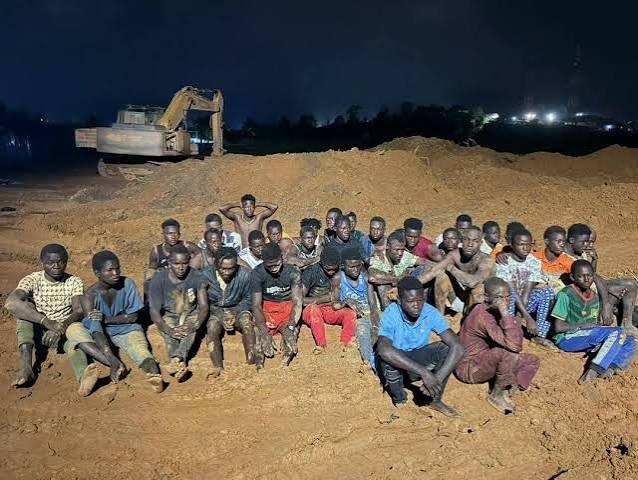
Yet, here on the grounds of Upper Denkyira municipalities, particularly Dunkwa-on-Offin and its surrounding villages, the math simply did not add up.
For every excavator the state claimed to burn or impound in the deep bush, three more were being transported down the highway in broad daylight, passing right beneath the noses of law enforcement.
Outside, the local population had fully integrated into the ecosystem. Across the local markets, hundreds of local merchants displayed gold-washing carpets and specialized digging shovels directly on the sidewalks.
Young men welded processing equipment on the shoulders of public roads, the sparks flying past the windows of administrative vehicles.
The complete absence of fear was absolute. There were no lookouts, no rushed transactions, and no threat of state intervention.
The sheer openness of the trade stood in stark contrast to the dramatic press releases issuing from Accra. On my phone, I scrolled through the latest state updates detailing the efforts of NAIMOS.
The official reports claimed aggressive enforcement campaigns, asserting that hundreds of suspects had been apprehended and dozens of excavators disabled in high-profile sweeps across the forest basins.
Yet, here in the heart of the cocoa-growing belt, the ground reality revealed a completely different story. The high-profile military raids were merely a cosmetic band-aid on a systemic wound.
While task forces occasionally display burned or, in recent times, impounded excavators deep in the bush to satisfy media cameras, the industrial pipelines supplying those exact machines remained wide open, operating next door to the very institutions tasked with enforcing the law.
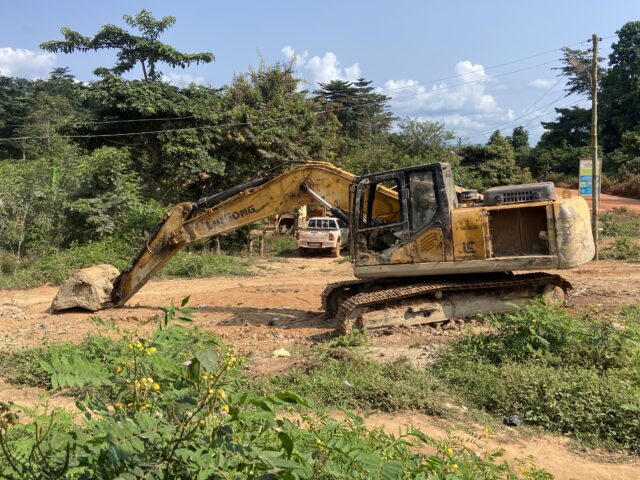
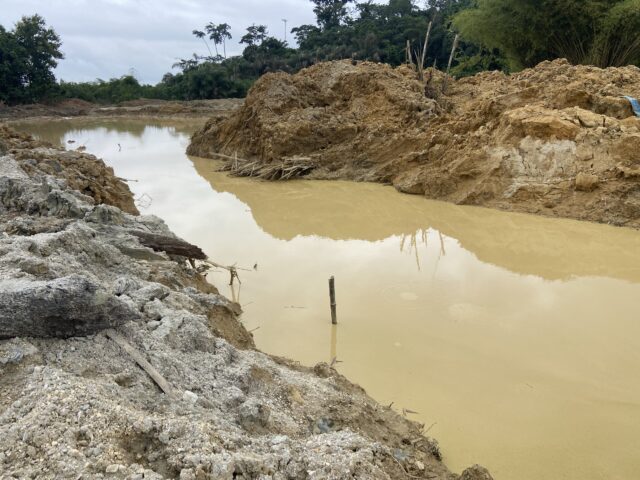
On my final evening in the municipality, I walked down to a ridge overlooking what used to be a premium cocoa plantation. The fertile topsoil was gone, replaced by a jagged network of stagnant, chemical-filled craters.
Nearby, the Offin River flowed past, no longer a lifeline of fresh water, but a thick, mustard-coloured sludge carrying toxic traces of mercury into the agricultural valleys.
I opened my journal, looking at the names of the open shops, the undisturbed checkpoints, and the unchecked corporate showrooms I had documented over my weeks of investigation.
The state was ostensibly at war with galamsey, yet every piece of hardware required to sustain the destruction was cleared through national ports, transported on public roads, and sold under the direct gaze of local authorities.
I closed my notebook as darkness fell over the municipal capital of Upper Denkyira East. There and then I came to terms with the elaborate theatre of political promises, and the selective enforcement could no longer mask the truth.
In a landscape where the tools of destruction are treated as everyday commodities, the answer to my question was written in the ruined soil and the poisoned water.
No one was fighting the menace. The fight had been compromised long ago by the very people claiming to be fighting the galamsey menace.