Rewriting the Old Narrative of Teenage Pregnancy through Plan International Ghana’s Rooting for Change: Jato and Aponoapono in the Spotlight
Rewriting the Old Narrative of Teenage Pregnancy through Plan International Ghana's Rooting for Change: Jato and Aponoapono in the Spotlight

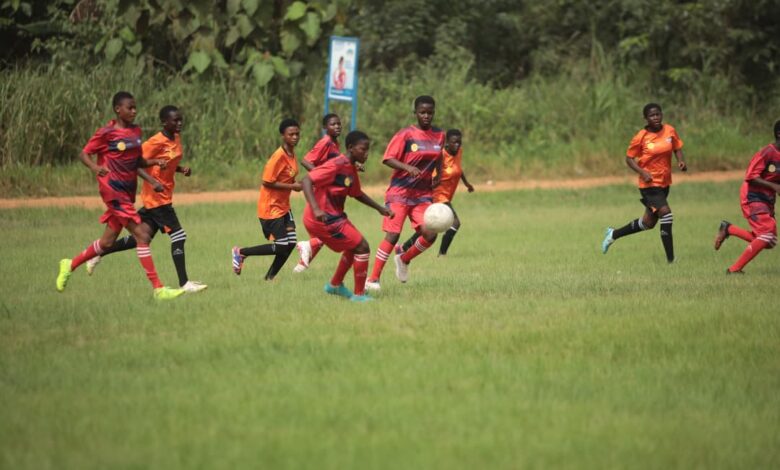
In the cocoa-rich Suhum Municipality of Ghana, a quiet revolution is unfolding on the football pitches of Jato and Aponoapono.
For years, these communities were tethered to a heartbreaking cycle where extreme poverty forced young girls into transactional relationships for basic needs such as food and sanitary pads, among other things, often resulting in high rates of adolescent pregnancy and school dropouts.
A locally phenomenon that gained currency is when what appeared to be a basic meal, cooked noodles in a pack (Indomie), became the attraction and craving that lured young girls to commercial motorbike riders commonly called Okada.
Indomie became popular, and by its design earned the nickname “laptop” among the village folks for how the pack flips open, the top covering reclining like the screen of a laptop.
With these “laptops”, the riders lured the girls into sexual relationships, which gradually led to a spike in teenage pregnancy cases in the village.
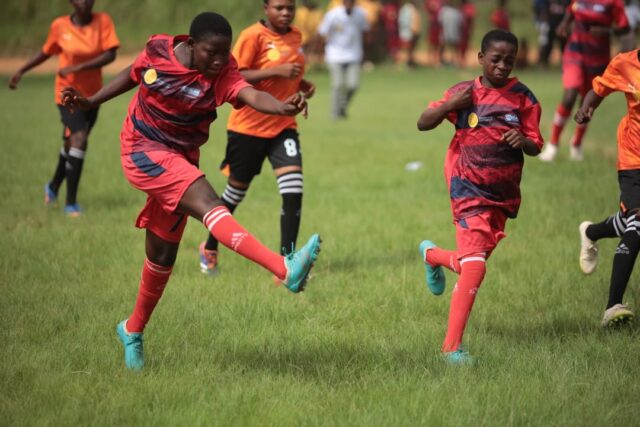
However, the narrative is changing. Through the Plan International Ghana’s “Rooting for Change” project, funded by Tony’s Chocolonely, football is being used as a transformative tool to reclaim the futures of young girls.
From Vulnerability to the Pitch
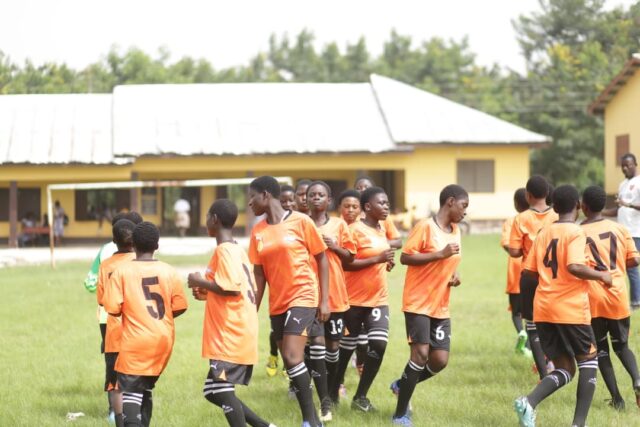
The “Rooting for Change” initiative, launched in late 2024, targets the root causes of teenage pregnancy in cocoa-growing regions. In Jato and Aponoapono, the project has integrated women’s football to challenge societal norms and provide safe, inclusive spaces for girls.
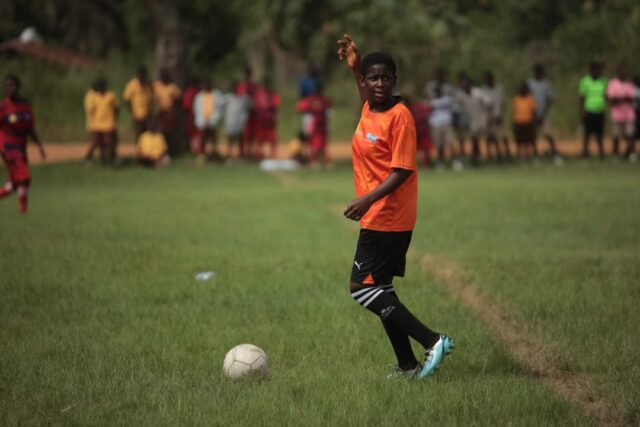
Football as a Shield: Instead of being vulnerable to exploitation after school, girls are engaged in organized sports that build self-confidence and teamwork.
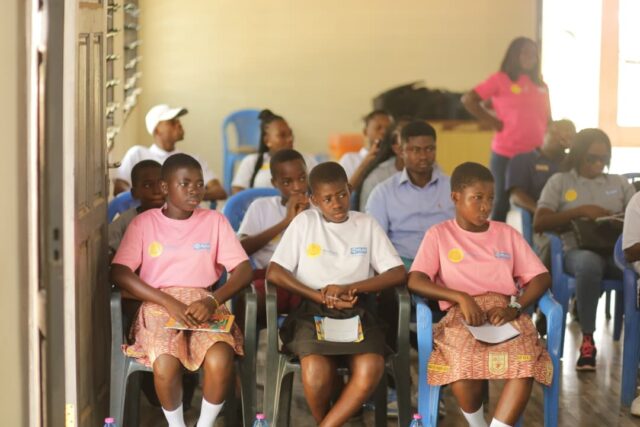
Peer Advocacy
Young “change makers” from these villages have been trained as peer educators to lead discussions on Sexual Reproductive Health and Rights (SRHR), gender equality, and the prevention of Gender-Based Violence (GBV).
Tangible Results: Zero Pregnancies in Jato
The impact of this holistic approach, combining sports with community-led protection, is already evident.
The 2025 Milestone
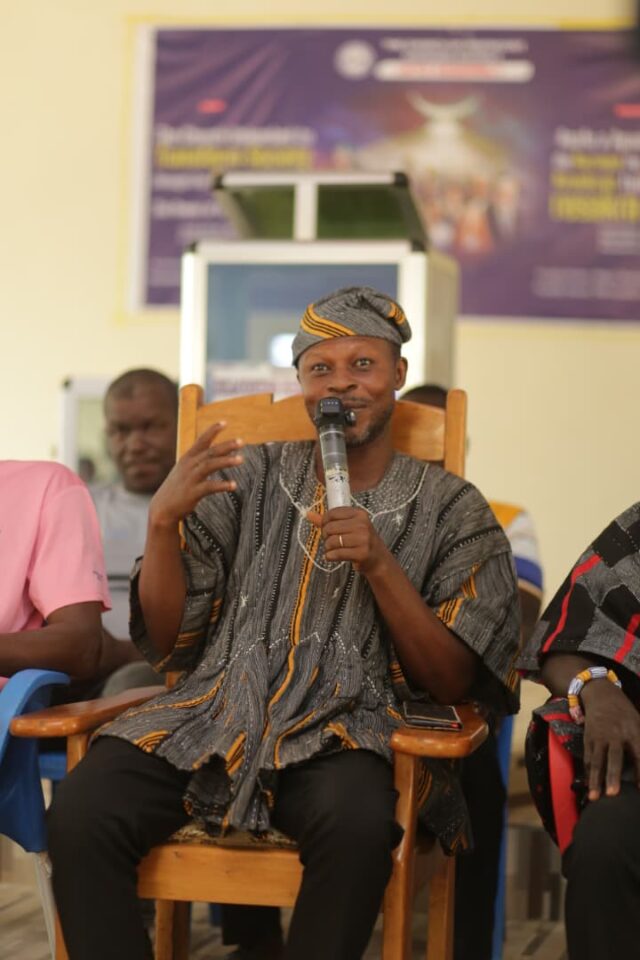
The Chief of Jato, Baffour Teitey Adjewi Narh III, addressing national officials from Plan International Ghana and journalists who had visited the community to assess the impact of the project, said that before the project was introduced into his community in 2024, the elders of the village were having a major challenge with teenage pregnancy in the community.
According to his narration, teenage pregnancy was very high. Saying “almost every year, we were recording pregnant teenage candidates taking the Basic Education Certificate Examination (BECE), and it was all because of the okada riders.
The girls depended on the okada riders for food and other school needs. Parents were not providing these essentials for their wards, and so the girls were seeking them from the riders, who ended up sleeping with them.
But because of this life-changing project introduced in our community, we did not record any teenage pregnancy in the last BECE, which is 2025.
“For the first time, the community recorded zero teenage pregnancies among candidates during the 2025 Basic Education Certificate Examination (BECE),” the elated chief reiterated.
In interviews with some of the children, they also confirmed what the town elders said.
One of the girls, Mansah (not her real name), said that, but for the project, she would have had multiple partners by now.
She said she used to have a boyfriend, who was not an okada rider, though.
According to Mansah, she did not know the implications of her actions then that she could get pregnant, but now she did, and it was because of the education she had received.
“I have been advising the girls who are still into that behaviour to put a stop to it because it won’t help them in any way. Some listen, others do not. Some of those who listened had completed school and were now in senior high school,” she said.
Amos (not his real name) said that although he did not have a girlfriend in the past, he was encouraged by friends to be a go-between, a kind of relationship intermediary for his friends and the girls.
“So, if somebody needed a girl, I would go and call them for the boys, who, after having sex with the girls, would give me money.
When the project was introduced, and they encouraged us to love ourselves, I changed, and so now when I see the boys doing that, it pains me, and I advise them against that,” he said.
Breaking Dependency
By establishing Community Child Protection and Labour Committees (CCPLC), the project has sensitized parents to provide for their children’s needs, reducing the girls’ reliance on local motorcyclists (okada riders) for school supplies.
A Spotlight on Aponoapono
In Aponoapono, the project is working toward an ambitious goal: empowering at least 800 adolescents (60% of whom are female) by September 2026.
Youth-Friendly Services: The initiative ensures that adolescents can access health services without discrimination or coercion, supported by partners like the Ghana Health Service and Ghana Education Service.
Community Shielding
Local leaders and even okada riders are being brought into the conversation, turning former perpetrators or bystanders into active protectors of girls’ rights.
The Future of the Cocoa Girl
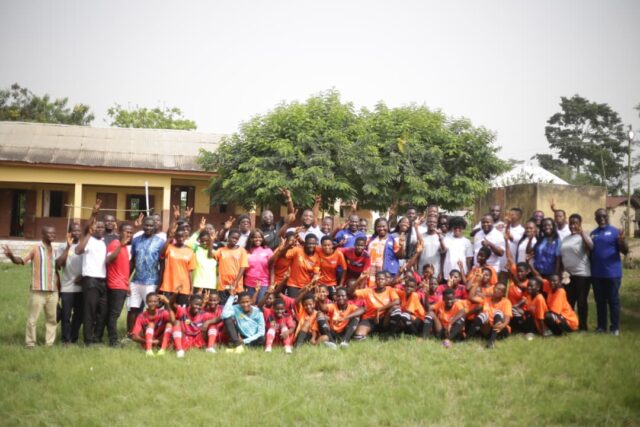
As Rooting for Change continues to pilot in these communities, it proves that when girls are given a ball, a safe pitch, and accurate health information, they can outrun the statistics.
In Jato and Aponoapono, the goal is no longer just on the scoreboard; it is the sight of every girl completing her education, free from the shadow of unintended pregnancy.
According to the Project Manager of Rooting for Change, Bless Vieku, the Rooting for Change initiative uses a structured peer-education model to empower youth in cocoa-growing communities like Jato and Aponoapono.