Governor Asiama Admonishes Journalists to Drive Economic Reset
Governor Asiama Admonishes Journalists to Drive Economic Reset

The Governor of the Bank of Ghana (BoG), Dr. Johnson Pandit Asiama, has admonished journalists, news publishers, and media owners to take a leading role in anchoring public confidence and consolidating the nation’s recent economic gains.
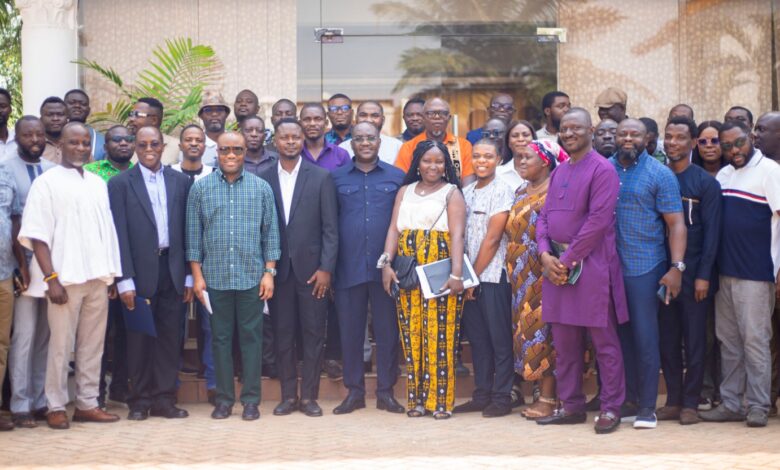
In a speech read on his behalf by Dr Francis Yao Kumah, at a two days capacity-building workshop for members of the Private Newspapers and Online News Publishers Association of Ghana, (PRINPAG) in Ada on January 24, 2026, the Governor argued that the media’s ability to provide context and clarity is the essential “bridge” needed to move Ghana from temporary stability to permanent prosperity.
He explained that resetting the economy requires a fundamental shift in the behaviour of institutions and the expectations of the public, emphasising that economic reporting influences market behavior and household decisions, thus the media holds the power to either stabilize or disrupt the recovery.
The Governor identified the media as a critical anchor of clarity, tasked with explaining complex monetary policies to a public that might otherwise react with fear or confusion.

Dr. Francis Yao Kumah
Beyond reporting data, the Governor urged the media to perform three vital functions: providing deep context to policy choices, scrutinizing institutions constructively to enhance accountability, and aggressively countering misinformation.
He emphasized that when journalists break down complex dynamics like interest rate paths and foreign exchange norms into accessible stories, they empower citizens to engage with the economy with confidence.
This transparency is particularly crucial as the Bank of Ghana prioritizes orderly markets and resilient digital finance systems throughout 2026.
He highlighted the remarkable turnaround achieved over the past year. Ghana entered 2026 on a significantly stronger footing after a 2025 defined by fiscal discipline and credibility.
Key indicators underscore this recovery, most notably a sharp decline in inflation from 23.8 percent in late 2024 to a stable 5.4 percent by December 2025.
This achievement is backed by gross international reserves exceeding US$13.9 billion, which provides more than five months of import cover and serves as a vital shield against external shocks.
Dr. Asiama noted that while these numbers are impressive, stability should be viewed as a foundation rather than a final destination.
To support this mission, the Bank of Ghana is launching several initiatives to strengthen its relationship with the press.
These include specialized training programs on monetary policy, the establishment of a regular Editors’ and Producers’ Forum, and the debut of the “Economic and Financial Story of the Year” Award.
The winner of this prestigious award will receive sponsorship to attend the IMF and World Bank Meetings, further incentivizing high-quality economic journalism.
Dr. Asiama, however, reaffirmed the Bank’s commitment to transparency, promising the media timely access to data and proactive briefings.
He reminded the audience that resetting an economy is not the work of a single institution but a collective effort, adding that, working together to reset expectations and reinforce institutions, the Governor believes the Bank and the media can ensure that recent economic gains translate into lasting prosperity for all Ghanaians.