Policymakers urged to go beyond basic access and ensure that safely managed water becomes a universal standard.
Policymakers urged to go beyond basic access and ensure that safely managed water becomes a universal standard.

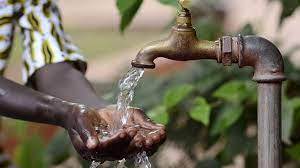
Water, Sanitation, and Hygiene (WASH) sector players have admonished policymakers to urgently move beyond basic access to make safely managed water a standard for all.
The participants drawn from Civil Society Organisations (CSOs), Non-Governmental Organisations (NGOs), Metropolitan, Municipal and District Assemblies (MMDAs) made the call during the 107th edition of the National Level Learning Alliance Platform (NLLAP) organised by the Coalition of NGOs in Water and Sanitation (CONIWAS), in collaboration with IRC, held in Accra.
The IRC Ghana, sharing its findings from a study it conducted to assess progress towards the provision of safely managed services in Asutifi North District in the Ahafo Region, under the ANAM Initiative launched in 2018 with a WASH master plan to achieve sustainable safe water, sanitation, and hygiene services for all district residents by 2030 revealed that there was slow progress in access to safely managed water services (increased from 5% in 2017 to 16% in 2024; an average of 1.5% per annum).
According to the study if thing do not changed and the country moves with the pace it has been moving the target of achieving a 30% coverage at the end of 2030 will not be met.
The study also identified systemic barriers which are hindering district-wide progress towards safely-managed services and has thus provide recommendations for national and local stakeholders, including Hilton partners, to inform strategies supporting safely managed water services.
Another area of concern raised in the study was that the Revised Water Policy, Ghana WASH Programme, which emphasises access and sustainability, lacks clear directives on safely managed services.
Although the policies mentioned safely managed water, they lack detail on implementation, financing, and service standards.
The following recommendations were made to address the gaps:
National Level
- Set standardized targets: Establish specific, time-bound goals for safely managed water services in national water policies to guide implementation and accountability.
- Strengthen monitoring systems: Improve quality of data at admin level- water quality data for safely managed reporting at national level.
- Standardise tools & benchmarks: Provide cost estimation tools, guidance, and clear performance benchmarks for all water service providers.
- Promote advocacy & demand creation: Run national campaigns to raise awareness, shift public perceptions, and drive demand for safely managed services.
District and service provider level
- Integrate into local planning: Embed safely managed water objectives into DMTDPs, district WASH strategies, and investment plans aligned with national priorities.
- Build technical capacity: Strengthen local government staff through training, mentorship, and district-level technical support.
- Tailor delivery models: Encourage flexible service approaches suited to rural, peri-urban, and urban contexts. • Invest in rehabilitation & upgrades: Prioritise system rehabilitation, infrastructure upgrades, and sustainable financing to improve coverage and service reliability.
- Enhance monitoring: Strengthen district staff capacity and provide technical support for data collection and reporting on safely managed water services
Closing policy gaps, investing strategically, and strengthening partnerships between the government, the private sector, and communities are key to achieving the targeted goal.